Given a question, learn the discipline
Most of my research started as someone else's brief: a course project, a question a lecturer posed, a claim worth testing. What counts is what I did with it, what each one taught me, and how together they got me into deep learning research at Haizea Analytics.
Transformers' Revenge: where a bold claim breaks
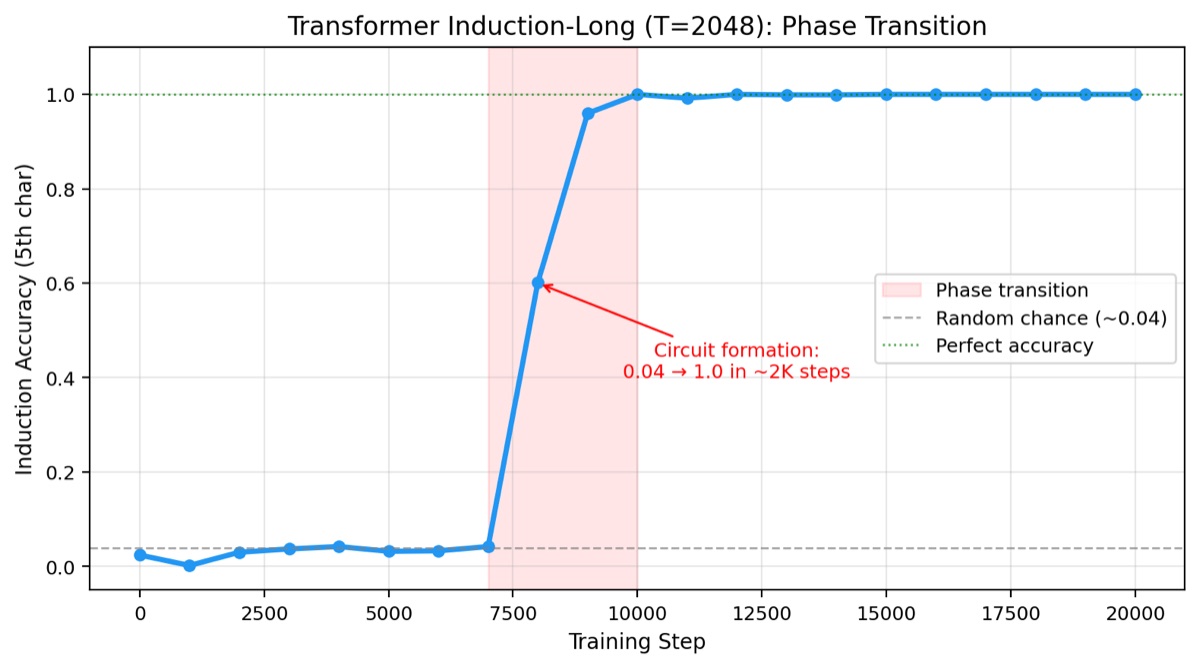
A recent paper claimed a minimal recurrent model, minGRU, matches Transformers. We tested it on tasks that need real retrieval, with 27 runs across three architectures, and wrote our predictions down before running anything. I built the Transformer and designed the experiment grid.
what I learned Commit to a prediction before you see the result. Three of our four predictions held. We reported the one that didn't, along with a phase transition we hadn't predicted that may explain it.
A GPT from scratch, on almost no data
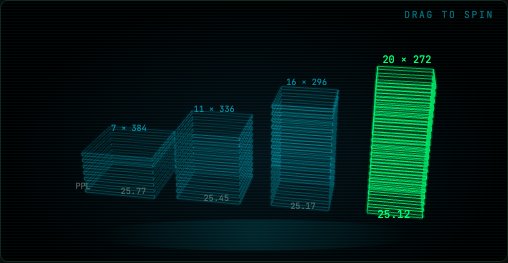
A 30M-parameter GPT trained on 3.7M tokens, about 160 times less data than scaling laws suggest. I changed one thing at a time against a fixed baseline, and shipped the model as a live demo.
what I learned Small data changes the rules. The tokenizer mattered more than the architecture, depth beat width, and a component that helps at scale (SwiGLU) hurt here.
Flow matching: what the network should predict
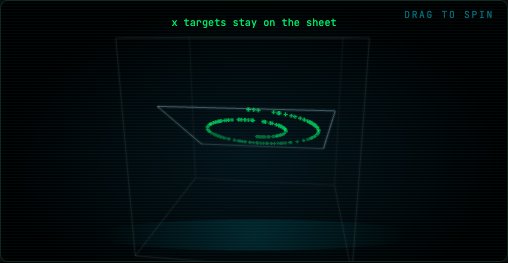
Should a generative model predict the clean data or the velocity? I tested every combination as the data dimension grew, worked out why one collapses, found what it costs to rescue, and implemented one-step MeanFlow.
what I learned Ask why a result happens, not just whether. And recipes tuned at large scale solve problems a small model may not have.
FoodLens and HCI: research with real people
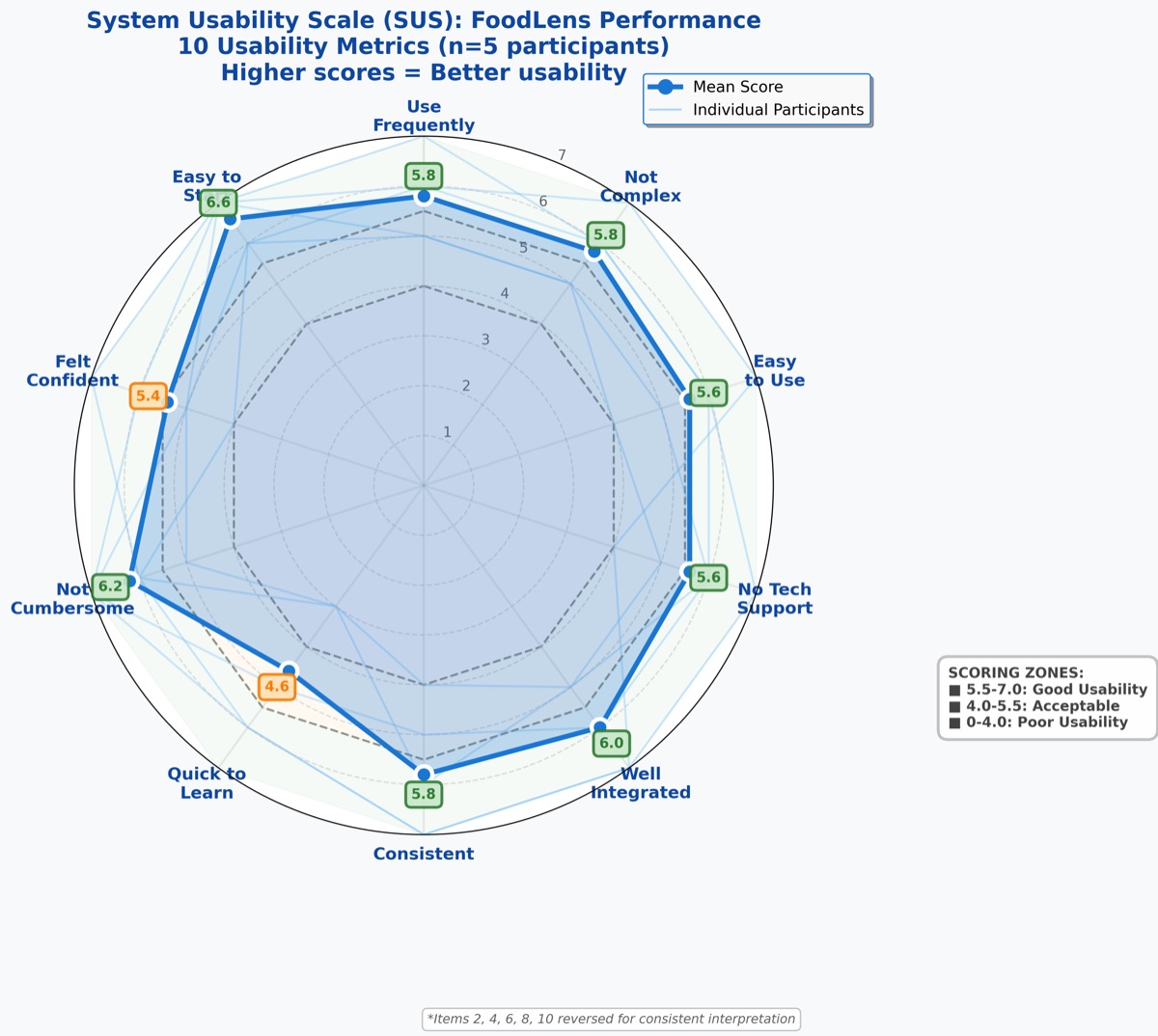
Three projects across the HCI pipeline, ending with FoodLens: an app I built and deployed, then evaluated with participants, phone against smart glasses, with observation, interviews and usability scoring.
what I learned Measure what people do, not what you hope they do. Trust in an AI feature dropped after its first failure and did not come back.
Before ANU: publishing as an undergraduate
At Manipal I co-authored peer-reviewed papers on electric propulsion for fixed-wing aircraft (2021) and blockchain for organ donation (2023), and was first author on a review of AI in material science (2024). They taught me to read a literature properly, write for reviewers, and take criticism in public.
How it added up: Haizea
This body of work is what got me into Haizea Analytics, where I now do deep learning on satellite imagery to map Australia's tree canopy. It showed four things:
- I could deliver real ML, trained, evaluated and shipped, not left in a notebook.
- Research discipline: predictions first, one change at a time, and honesty about what didn't work.
- Small-data work: when data is scarce, every design choice becomes a question of efficiency.
- Real deep learning skill, and instinct for which question to ask next.
The briefs were set by others. The discipline I took from them is mine, and it is what I bring to the work now.